Federal Government Deploys Ebola Measures as ₦10bn Allocation Sparks Political Debate
ABUJA, October 24, 2026 — The Federal Government says it has intensified efforts to contain Nigeria’s confirmed Ebola case, strengthening contact tracing, health surveillance and public information as questions over a ₦10 billion emergency preparedness allocation spark a political debate about transparency and readiness.
The Ministry of Health and Social Welfare confirmed the case on October 20 after laboratory testing identified Ebola Bundibugyo virus disease in a woman who had recently travelled from Uganda. The patient was isolated and receiving medical care, while public health teams began tracing people who may have been exposed.
According to the ministry and the World Health Organization (WHO), 44 contacts had been identified and were being monitored. Authorities also stepped up infection-prevention measures at the private health facility where the woman had received care and urged healthcare facilities nationwide to remain alert to possible symptoms and report suspected cases promptly.
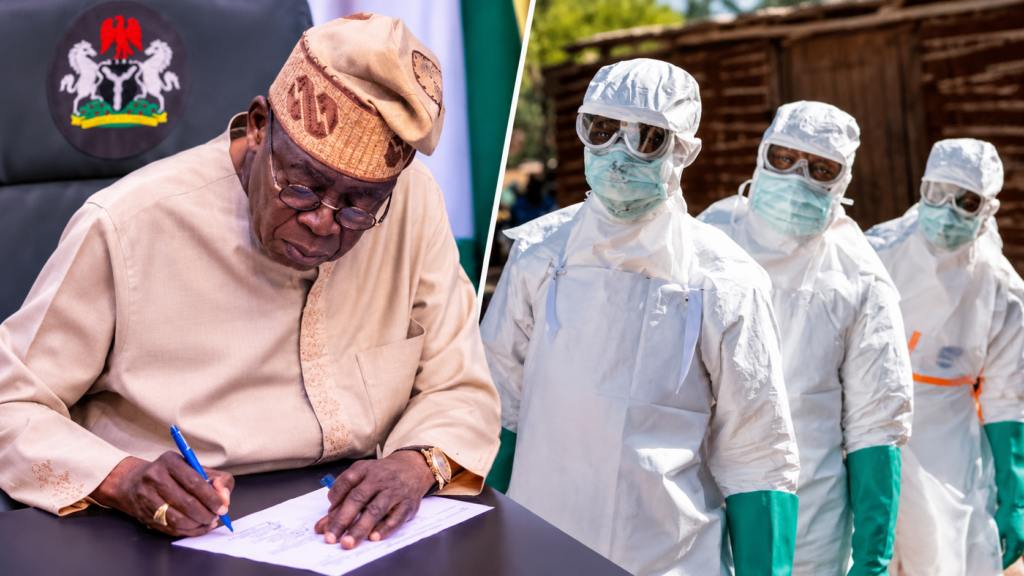
Coordinating Minister of Health and Social Welfare Professor Muhammad Ali Pate has said the government activated its emergency response arrangements and is working with the Nigeria Centre for Disease Control and Prevention (NCDC), the Federal Capital Territory authorities and international partners. The Presidential Task Force on Ebola, chaired by Chief of Staff to the President Femi Gbajabiamila, has also met to review the response.
President Bola Ahmed Tinubu announced the establishment of the task force and a ₦10 billion emergency intervention allocation on June 9, 2026. The funding was intended to strengthen NCDC preparedness and support public health emergency response activities. The announced measures included stronger passenger screening at international airports, health declarations for travellers from designated high-risk areas and readiness to isolate and refer suspected cases.
The allocation has now become a point of political contention. On October 22, spokesperson Dele Alake said the All Progressives Congress (APC) Presidential Campaign Council maintained that the ₦10 billion had remained untouched, arguing that relevant agencies had relied on other available resources to manage surveillance and response activities.
Former Vice-President Atiku Abubakar, through a statement issued by his campaign communication team on October 23, called for a detailed public account of the fund. He asked the government to clarify whether the money had been released and, if so, to disclose disbursements, payment dates, contracts, recipients and items delivered. His questions also focused on the timeline of detection and the adequacy of contact tracing and protection for frontline health workers.
The competing statements leave an important distinction for the public: the government announced the allocation in June, while the APC campaign council says it has not been spent. A clear accounting from the responsible authorities would help establish the fund’s precise status and show how preparedness commitments translate into operational capacity. The claims about the fund should not be treated as an independently audited account.
For families and communities, the immediate priority remains preventing further transmission, protecting health workers and ensuring people receive reliable information. WHO has stressed that rapid identification, follow-up of contacts, infection prevention and control, laboratory capacity and essential protective supplies are central to containing the disease.
Health authorities have urged Nigerians to remain calm, practise regular hand hygiene, avoid direct contact with the blood or body fluids of anyone who may be infected, and seek prompt medical advice if they become unwell after a possible exposure. People should provide healthcare workers with accurate travel and exposure histories and follow instructions from public health officials.
The case has also renewed scrutiny of airport surveillance and the readiness of health facilities. Rather than allowing the debate to be reduced to party accusations, the key questions are whether screening and referral systems are functioning, whether exposed people are being followed up quickly, and whether the resources announced for preparedness are available and properly accounted for.
As the response continues, Nigerians will need timely updates from health authorities and a transparent explanation of the ₦10 billion allocation. Public confidence depends both on effective disease control and on clear answers about how emergency funds are handled.
Plus Media TV will continue to follow official updates on Nigeria’s Ebola response and the status of the emergency preparedness allocation.